By Boluwaji Obahopo & Edwin Philip
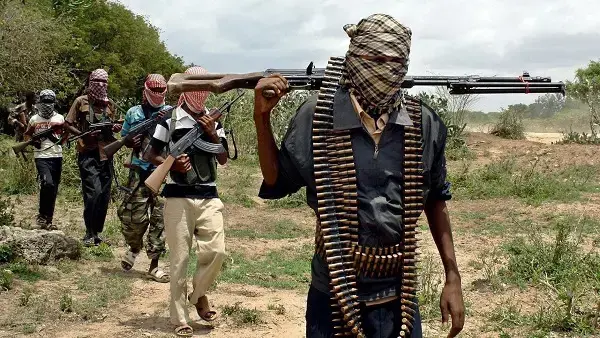
Troubling accounts from residents of boundary communities in Nasarawa State and fresh security disclosures in Kogi have exposed what locals describe as a widening network of forest corridors, transit routes and temporary camps allegedly used by terrorists and bandits operating across the North-Central region.
The revelations come amid persistent attacks and rising tensions between Nasarawa and Benue communities over the origin of armed groups responsible for killings and mass displacement in the border areas.
While the Nasarawa State Government has repeatedly denied harbouring criminal elements, residents of affected communities insist that armed groups move freely through forest routes linking Nasarawa to Benue. In neighbouring Kogi, authorities have acknowledged that forests in parts of the state are increasingly being used as hideouts by bandits displaced from Northern states by military offensives.
Locals say the porous boundary communities and thick forest belts stretching across Nasarawa, Benue, Kogi, Niger and Kwara states have gradually evolved into strategic movement corridors for armed groups — enabling them to launch attacks, regroup and retreat with little resistance.
The claims come amid lingering accusations and counter-accusations between stakeholders in Nasarawa and Benue states over the origin of recurring attacks, as well as mounting pressure on security agencies to confront the cross-border dimension of the crisis.
While the Nasarawa State Government has denied allegations that the state harbours criminal elements, residents of affected communities insist that armed groups operate openly along forest corridors linking Nasarawa to Benue. In Kogi, authorities have acknowledged the relocation of bandits into the state’s forests following military offensives in neighbouring states.
Routes are not hidden -Nasarawa residents
President of the United Farmers Association, Kadarko, in Keana Local Government Area of Nasarawa State, Chief Denen Gbongbon, told Vanguard that communities in Obi, Keana and Doma local councils, have, for years, served as transit points and camps for armed groups heading toward Benue.
“For a long time now, Obi, Keana and Doma have been serving as transit routes and even temporary camps for these bandits,” Gbongbon said, “the routes are very clear. They are not hidden. In Kadarko, which is in Keana LGA, the major roads are between Keana and Doma. They come in through Barkin Coaltar, penetrate toward Torkura and from there move straight into Benue.”
He alleged that the Akala forest in Obi LGA, which connects to Keana, functions as a major staging ground.
“They camp in Akala forest. That forest connects Keana too. They have camps there. From there, they connect through Akeleku Sidi, Akaba, Ahume; all these communities are in Obi LGA, and there are contiguous bushes linking Kadarko where they also have camps,” he said.
Describing their movement pattern, Gbongbon added: “They follow a valley behind Agyragu. The abandoned railway corridor has become a strategic pathway.
“They pass between Ude and Yelwata through the abandoned railway station. They follow the rail tracks into Benue axis and begin to expand from there,” he alleged.
We see them with our eyes
According to Gbongbon, local farmers and villagers frequently sight the gunmen moving in groups.
“As they are moving, we are seeing them. Sometimes they carry arms openly. Sometimes they come with cattle. At other times, they ride Bajaj motorcycles, three persons per bike, following that same route,” he claimed.
He said community members often provide intelligence to security agencies, but lamented what he described as lack of decisive follow-up.
“People in the farms see them and give us information. We pass the information to security. But it appears security is not ready to follow up. That is their major route; they keep passing there,” he said, insisting that authorities cannot claim ignorance.
“Government is fully aware. We have written severally to the Nasarawa State Government, to the local governments, to the governor himself and to every security architecture, including the media. So, how can the government pretend not to be aware?” he queried.
“If they engage us and invite us, we will come and show them everywhere. It only means they don’t want to take action.”
Allegations against traditional rulers
In a more explosive claim, Gbongbon accused some local chiefs in boundary communities of complicity.
“The issue started from land-grabbing. Some Alago chiefs were accused of harbouring these people. They sold land to them, land that belongs to Tiv and some Eggon farmers,” he alleged.
“The people did not just come here. They acquired land from those chiefs. After settling, they brought militias to protect the land. That is how the criminal elements came in.”
He further alleged that some traditional rulers misled security operatives. “Whenever security personnel are deployed, some chiefs allegedly deceive them by giving false information. They don’t take them to the exact location where these bandits are camped. Instead, they tip them off to go under cover,” he claimed.
Gbongbon referenced the arrest of an Ardo in Kadarko in connection with the June 2025 Yelwata killings.
“Do you know that over 26 AK-47 rifles were reportedly recovered in his camp in Kadarko? If security agencies are serious, they would interrogate the chiefs who appointed him. Did they check his background?” he asked.
Efforts to get reactions from the accused traditional rulers were unsuccessful at press time.
Humanitarian toll: Kadarko accounts for 14,318 IDPs
The crisis, residents say, has triggered mass displacement as “14,318 registered IDPs are from those communities,” Gbongbon claimed.
“If you go there now, you won’t find inhabitants. Only bandits are occupying the area,” he painted a bleak picture of living conditions.
“Some people are staying with friends. Some are sleeping in churches, marketplaces, anywhere there is space. In Kadarko North Primary School, they are there. In the Catholic Church, they are there. In grain stores in the market, they are there. During the day, when buying and selling is going on, they disappear and return at night to sleep.”
Personal tragedy
Mr. Sampson Akaa of Umaraye village in Keana LGA recounted a personal tragedy.
“Our community was asked to return home from the IDP camp on January 26. They packed their loads and went back. On reaching home, they went to the river for fishing. My wife was the first person attacked by suspected herdsmen. Four persons were killed and one is still missing,” he said, adding: “We thought peace had returned. We didn’t know danger was still there.”
Kogi forests as strategic haven
In neighbouring Kogi State, authorities have acknowledged that forested areas have become sanctuaries for armed groups displaced by military offensives elsewhere.
Terrorism, which escalated in Zamfara, Katsina and Kaduna states, has intensified since the advent of the present Federal Government, forcing some groups southward.
Governor Ahmed Ododo recently admitted that certain bandit leaders had relocated to Kogi forests.
“We will take the fight to them in their hideouts. We will not wait for them to attack us,” the governor said during a security briefing.
Kogi Commissioner for Information and Communications, Kingsley Fanwo, also confirmed the spillover effect.
“Intensified military operations in neighbouring states are pushing terrorists toward Kogi’s border communities. Some of them flee from Kwara and Niger axes into Bassa and Anyigba areas,” he said.
He described a “hibernation cycle” where gangs attack elsewhere and retreat into Kogi’s forests to regroup.
Crackdowns, but threat persists
Security agencies have carried out joint air and ground operations in Kabba-Bunu, Yagba and Lokoja LGAs, arresting suspected collaborators accused of supplying food and logistics to bandits. Arms and ammunition were reportedly recovered during raids.
Entire communities such as Ogbabon in Lokoja LGA were evacuated as security forces intensified operations.
Yet, kidnapping incidents persist along major corridors like the Kabba-Lokoja road, disrupting economic and educational activities. Markets in parts of Kogi West have been shut, while schools were temporarily closed due to security concerns.
Regional challenge demands regional solution
Security analysts argue that the forests linking Nasarawa, Benue, Kogi, Niger and Kwara states form an interconnected belt exploited by armed groups for movement and regrouping.
They stress that sustained military pressure in one state without synchronised operations across neighbouring states risks merely displacing the threat.
For residents in Nasarawa’s boundary communities and Kogi’s forested belts, however, the priority remains immediate security.
“We are tired,” Gbongbon said. “We just want our people to go back to their farms and live without fear.”
The post Nasarawa, Kogi, Benue in grip of terror: Residents reveal routes, transit camps appeared first on Vanguard News.