•Environmentalists, realtors,, others react to threats and offer perspectives on balance
•We’re taking steps to enforce environmental rules —NESREA
By Folarin Kehinde
Once celebrated for its rolling hills, protective green belts and carefully mapped master plan, Abuja is fast losing its natural shield to relentless urban expansion.
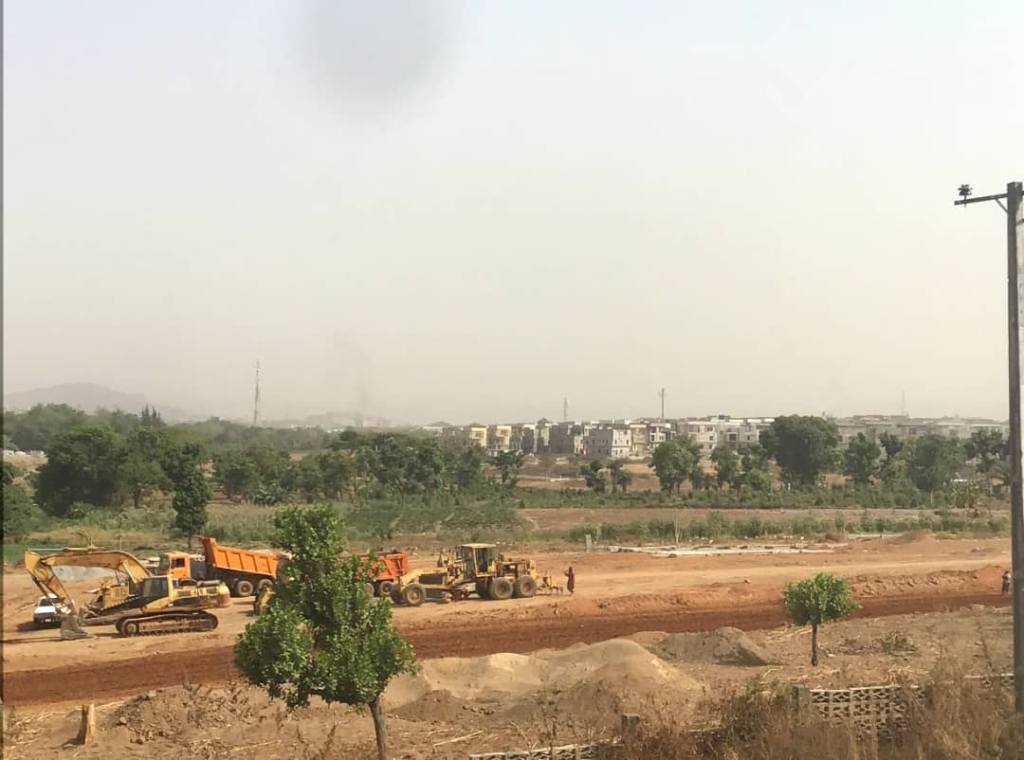
Across the Federal Capital Territory, chainsaws hum where trees once stood, and bulldozers carve through forests that once cooled the city and absorbed its floods.
But beyond the rising skylines and luxury estates lies a more troubling reality: as green cover disappears, temperatures climb, floodwaters surge faster, and climate risks intensify. What was once a gift from nature, has not been sapped by man in his quest to build more structures for pecuniary gains. Thus, with more houses springing up here and there, fetching millions for their owners, Abuja is gradually being turned into a scorched earth and rendered bare by builders. The effect comes back to hurt every city dweller.
When Abuja was chosen as Nigeria’s capital in 1976, it wasn’t just a political decision — it was a bold vision. Planners imagined a city that would rise in harmony with nature: rolling hills, lush forests, and wide green belts that would shield residents from the harsh African sun and unpredictable rains. Every street, park, and estate was mapped with an eye toward balance — a capital that would breathe, not just function.
Architects and urban planners dubbed it a “green city,” a symbol of modernity intertwined with ecology. Protected forests and buffer zones were deliberately integrated into the master plan, meant to absorb floodwaters, moderate temperature, and sustain biodiversity. Abuja was meant to be more than concrete and steel; it was meant to be a living city, where nature and development coexisted.
Today, that vision is under siege as rapid population growth, sprawling estates, and unrelenting construction are erasing the very green spaces that were meant to define the capital. The dream of a climate-resilient Abuja is fading, replaced by heat, dust, and the creeping threat of floods — a stark warning that Africa’s showpiece city may be paying the price for unchecked urban ambition.
From the air, the changes are undeniable. Satellite images show forested hills around Gwarimpa, Kubwa, and Jabi shrinking year by year, replaced by sprawling housing estates, highways, and commercial complexes. Where once thick greenery cushioned the city against heat and floods, now bare patches of land and dusty roads dominate the landscape.
Even on the ground, the transformation is stark. Hills that used to rise in lush cover are now scarred with the marks of bulldozers, while luxury estates and gated communities mushroom in previously protected zones. Residents on the outskirts of Lokogoma and Dutse-Alhaji report that streams have dried up or overflowed after rains, a direct consequence of lost forest buffers.
Satellite data compiled over the past decade shows a clear trend: between 2010 and 2023, forest cover in the Federal Capital Territory declined by at least 15–20%, with some formerly dense patches almost entirely erased.
The green belts once protected by Abuja’s master plan are increasingly dotted with concrete, signaling a city racing ahead with development — and leaving its environment behind.
Abuja’s rapid expansion is fueled by numbers that keep climbing. In the 1980s, the city was home to just a few hundred thousand people; today, estimates place the population at over 3.6 million, with thousands more arriving every month in search of jobs, education, and better living standards. The influx has transformed the capital from a planned, orderly city into a sprawling urban landscape.
Every new resident means more homes, more roads, and more demand for commercial and social infrastructure. Neighborhoods like Gwagwalada, Kubwa, and Jabi have mushroomed into dense settlements almost overnight, with forested areas cleared to make way for housing estates, markets, and highways. The green buffers once protecting the city from flooding and extreme heat are vanishing under relentless urban sprawl.
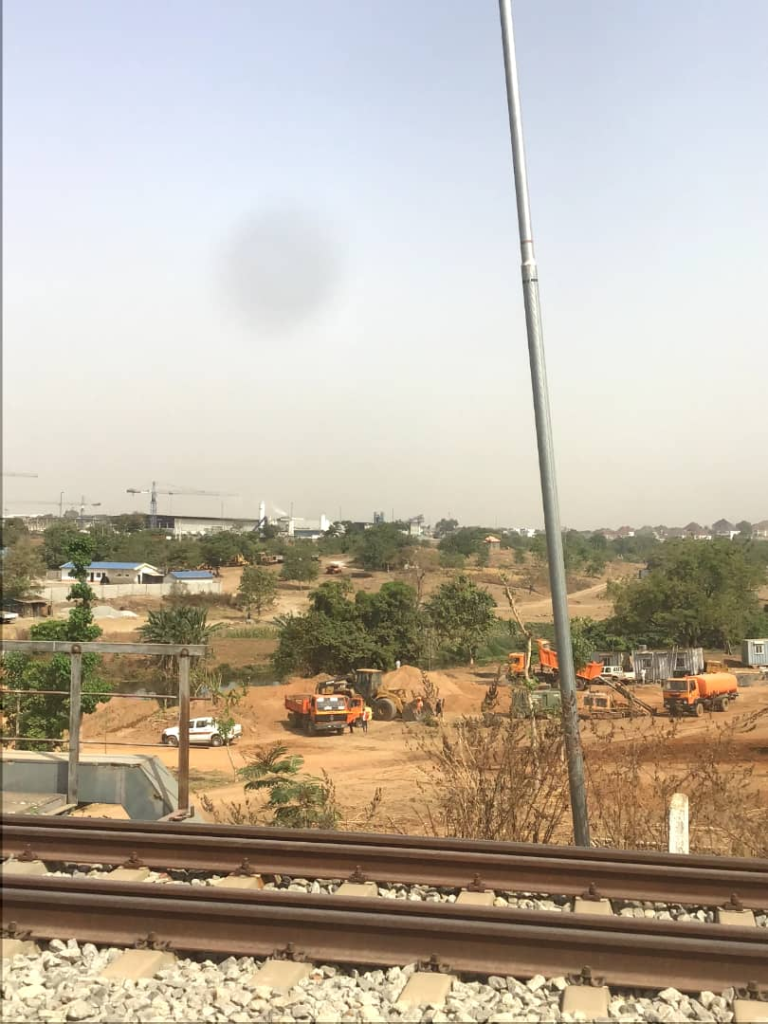
Abuja’s population boom has ignited a real estate frenzy, transforming the city’s landscape almost overnight. From the outskirts of Lokogoma and Lugbe to the scenic hills of Gwarimpa and Jabi, forests are being cleared at breakneck speed to make way for gated estates, luxury apartments, and sprawling residential complexes.
Private developers are capitalizing on soaring demand, marketing “dream homes” to a growing middle class while green spaces vanish in the process. For every estate that rises, hills are flattened, trees uprooted, and wetlands drained — once-natural buffers against heat and flooding now reduced to concrete foundations.
The proliferation of estates has also pushed informal settlements deeper into remaining forest zones, creating a cycle of deforestation that is difficult to control.
In Abuja, every new road seems to come with a disappearing forest, from the busy Airport Road expansions to new expressways linking Gwarimpa, Kubwa, and Bwari, hills are being flattened, streams diverted, and trees uprooted to pave way for asphalt and concrete.
Infrastructure projects, hailed as signs of modernity, are silently carving through the city’s green belts. Large-scale projects like the Abuja-Kaduna expressway upgrade and ongoing urban ring roads cut across previously protected areas, displacing vegetation and altering natural water flow. Bridges, drainage channels, and utility corridors often follow the path of least resistance — which increasingly means clearing forests rather than conserving them.
The scars of deforestation and relentless urban expansion are no longer abstract warnings — they are unfolding in real time across the city. Summers are hotter, rains are heavier, and flooding has become a recurring nightmare for residents living near cleared forests and dried-up streams.
Flooding, once confined to low-lying areas, now strikes unexpectedly across parts of Gwagwalada, Kubwa, and Lokogoma, washing away roads, eroding soil, and damaging homes. Experts warn that the city’s drainage systems — designed with forested catchments in mind — can no longer cope with the volume of runoff from cleared hills and impermeable surfaces.
Biodiversity, too, is under siege as birds, monkeys, and other wildlife that once thrived in Abuja’s green belts are disappearing as forests vanish, and streams that supported fish and amphibians are drying or becoming polluted.
Data from environmental monitoring shows that average temperatures in the FCT have risen by 1.2°C over the past decade, a trend linked directly to the loss of trees and green cover. Without forests to provide shade and cool the air, neighborhoods are experiencing the urban heat island effect in full force, with afternoon temperatures noticeably higher than just a decade ago.
Similarly, geospatial studies of the city reveal a significant drop in forestland from about 4,059/ km² in 1987 to 2,265/ km² by 2021, signalling rapid deforestation linked with urban expansion. Research also indicates that the FCT experienced a roughly 61/ % reduction in closed and open canopy vegetation between 1987 and 2014, underscoring how urban growth has eaten into former green areas.
At the national level, Nigeria continues to lose about 400,000 hectares of forest each year due to deforestation from logging, agriculture and urbanisation — one of the highest rates globally.
Comparatively, Abuja’s 61% reduction in canopy vegetation between 1987 and 2014 places it among the fastest green-cover declining capitals in Africa. While population growth in Abuja mirrors Nairobi or Addis Ababa, its rapid estate proliferation and aggressive infrastructure projects are intensifying climate vulnerability more sharply than in some other capitals.
For many residents of the city, cases of flooding, heat waves and other environmental conditions have become the order of the day, In Kubwa, flash floods have become routine after heavy rains. Roads are washed out, homes partially submerged, and residents struggle to navigate streets that were once passable.
In the 2022 rainy season alone, widespread flooding struck large parts of the city affecting about 24,713 residents across several area councils, including Abuja Municipal Area Council, AMAC, Bwari, and Abaji.
Thousands were displaced, homes and infrastructure were damaged, and entire neighbourhoods, from Efab, Lokogoma and Lugbe to major expressways, experienced inundation due to heavy rains and overwhelmed drainage systems. A total of 131 structures were reported damaged in the city alone during that season.
Flash flooding in 2025 also paralysed parts of the city, with areas such as Asokoro, Guzape, Jabi, Kado and Wuse submerged and roads rendered impassable by knee deep waters during intense downpours — underscoring how recurrent and severe urban flooding has become.
These events are part of a wider pattern of increasing flood risk in and around Abuja during the rainy season, driven by heavier rainfall, blocked drainage and the loss of natural flood absorbing landscapes.
Beyond the expanding estates and rising skyscrapers, Abuja’s rural outskirts tell a different story — one of hardship, shrinking farmlands, and a changing climate that threatens livelihoods.
For generations, farmers in Gwagwalada, Kwali, and Bwari cultivated crops on fertile land shaded by trees and sustained by seasonal rains. But as forest cover is cleared for urban development, those natural systems are being disrupted. Trees that once protected crops from harsh sun and helped retain soil moisture are gone, exposing fields to intense heat and faster evaporation.
The loss of vegetation also accelerates soil erosion. With fewer roots to hold topsoil in place, rains wash away fertile earth, reducing yields and forcing farmers to clear even more land in search of productive soil — a cycle that further chips away at the remaining green belt.
For these farmers, deforestation isn’t just an environmental statistic — it translates into lost income, food insecurity, and a growing fear that their way of life is being buried under concrete and climate change alike.
Abuja is not just facing the impacts of climate change and deforestation; Nigeria has formally joined the global fight against it. As a signatory to the Paris Agreement, the country has submitted successive Nationally Determined Contributions, NDCs, outlining how it plans to cut greenhouse gas emissions and adapt to climate risks, including deforestation and land-use change.
Under its latest NDC/ 3.0, Nigeria has pledged to reduce emissions by around 29% by 2030 and 32% by 2035 compared with business as usual scenarios, while setting a pathway to net zero emissions by 2060. The plan also specifically targets land use and forestry — aiming to reduce deforestation by about 60% and plant millions of trees annually as part of its climate response.
This commitment reflects Nigeria’s recognition that land and forests are climate assets, not just economic resources — and that protecting them is central to meeting its Paris goals.
Against this backdrop, the deforestation and land clearing driven by rapid urbanisation in Abuja take on added significance: they aren’t merely local development issues, but barriers to Nigeria’s ability to deliver on its international climate obligations and protect its people from worsening heat, floods, and other climate impacts.
Abuja’s rapid expansion has sparked a heated debate among planners, environmentalists, and policymakers: can the city grow without sacrificing its climate resilience? Proponents of aggressive urban development argue that building new estates, roads, and commercial hubs is essential to meet the needs of a booming population. They point to the economic benefits, improved infrastructure, and increased housing availability.
Environmental experts, realtors, regulator react
A realtor, Anyebe Victor, argued that urbanisation is the cure, not the disease.
While critics lament the sight of fallen trees in emerging districts such as Wuye and Guzape, Victor said the real environmental danger laid beyond the city’s bright lights, in unplanned sprawl creeping across the outskirts of the Federal Capital Territory.
According to him, halting high-density development in central districts would not stop population growth. Instead, it would push thousands of residents outward into satellite communities such as Gwagwalada and Kwali Area Council, where low-density housing could consume vast stretches of forest land.
“It is better to accommodate 50,000 people within 100 hectares in the city than to clear 5,000 hectares in the rural councils for scattered bungalows,” he maintains.
Victor also links urbanization to cleaner energy use. In many rural FCT communities, firewood remains a primary cooking fuel, a practice that fuels deforestation. Moving families into estates connected to gas and electricity, he says, reduces dependence on charcoal and wood.
For Victor, the greater threat to Abuja’s ecosystem is poverty-driven, unregulated land use, not cranes on construction sites. “Smart development is the best conservation strategy we have,” he insists.
A policy expert and environmentalist, Jeremiah Ato, also raised alarm over the increasing temperature levels in the Federal Capital Territory, FCT, warning that Abuja might become unlivable within the next two decades if urgent environmental reforms were not implemented.
Ato stressed the need for sustainable development practices, noting that rapid urbanisation in the nation’s capital had significantly reduced green spaces and vegetative cover.
According to him, while infrastructural growth is necessary, it must be balanced with environmental considerations, especially in the face of worsening climate change.
“It’s not just about expanding the built environment. We must ensure that as we develop, we also preserve nature by maintaining adequate vegetative cover and planting trees across the city,’’ he said.
Ato lamented that Abuja, once known for its tree-lined streets, has witnessed a steady disappearance of greenery, particularly in the city centre, where pavements and concrete structures now dominate the landscape.
He called on the Federal Capital Territory Administration, FCTA, to urgently review its development policies and introduce laws that would make tree planting mandatory in all estates and construction projects within the city.
“There is a need for an enabling law that compels developers to integrate tree planting into their projects. This is no longer optional—it is necessary for our survival,” he said.
He however urged both FCT authorities and residents to act swiftly, warning that delay could have long-term consequences for the city’s climate, public health, and overall livability.
The Project Officer on Climate Change at the Centre for Journalism Innovation and Development, CJID, Nicholas Adeniyi, also warned that unchecked urban expansion and weak policy enforcement were eroding the city’s original master plan.
Adeniyi noted that Abuja was developed with integrated urban development with agroforestry, ensuring a balance among housing, agriculture and forest conservation.
He explained that older districts such as Asokoro still reflected this vision, with abundant trees and green areas embedded within residential layouts. However, he lamented that newer districts and satellite towns no longer followed this pattern.
On how to strike a balance between urban expansion and environmental conservation, Adeniyi emphasised the need for deliberate planning and strict adherence to zoning laws. He advocated the protection of ecological corridors linking forest reserves to urban areas, noting that such systems supported biodiversity and enhanced urban resilience.
He recommended policies that mandate tree replacement, suggesting that developers should be required to plant multiple trees for every one removed. Beyond legislation, he stressed the need for public awareness and cultural reorientation toward environmental stewardship.
We’re taking steps to enforce environmental rules —NESREA
For all the issues raised for and against Abuja urbanisation, the National Environmental Standards and Regulatory Enforcement Agency, NESREA, said it was working assiduously to maintain the needed safety of the city as the population continued to expand and more people required accommodation.
The NESREA Director Environmental Quality Control, Mr. Elijah Udofia, said the agency was strengthening enforcement of environmental laws to tackle rising deforestation, linked to rapid urbanisation in the Federal Capital Territory, FCT.
Udofia explained that the agency operates within a robust legal framework designed to safeguard forest ecosystems, even as development pressures intensify in Abuja.
On the protection of forested areas within the FCT, Udofia disclosed that, beyond federal regulations, efforts were underway to strengthen local frameworks.
He revealed that the Sustainable Forest Management Policy and Implementation Plan, alongside the Forestry Act for the FCT, had been reviewed and awaiting final gazetting to help in enforcing rules on the environment and related matters.
Udofia warned that unchecked deforestation, driven by urban expansion, posed serious environmental risks, including biodiversity loss, erratic weather patterns, water scarcity, air pollution, soil erosion and increased flooding.
On whether the agency has conducted studies on the impact of urbanisation on carbon sequestration and air quality, he said such studies were yet to be undertaken.
The NESREA director highlighted collaboration with the Federal Capital Development Authority, FCDA, as a key strategy in balancing development with environmental protection, adding that the partnership ensured strict adherence to Environmental Impact Assessment, EIA, requirements for all development projects in the territory.
He urged residents to play an active role by reporting cases of illegal deforestation through the agency’s official complaint channels, including its website, offices and enforcement hotlines.
Looking ahead, he affirmed that NESREA remained committed to promoting sustainable development through strict enforcement of environmental regulations and continued strengthening of policy frameworks.
But it remains to be seen how many trees will still remain to provide comfort for FCT residents as more monumental structures continue to emerge on existing and new districts in the capital city of Nigeria.