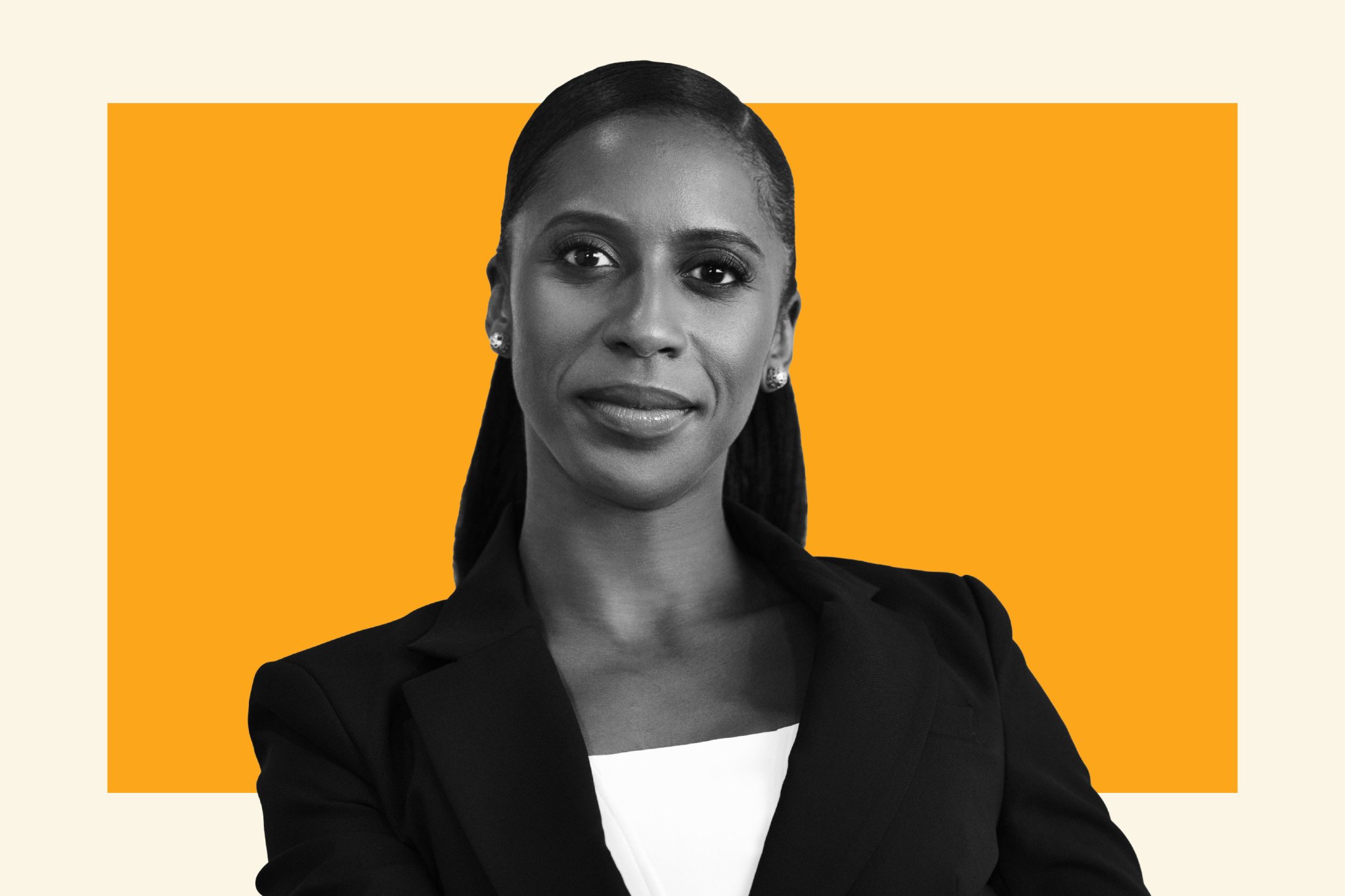
Good morning. CFOs are increasingly involved in AI strategy. For Seun Sodipo, CFO at Plaid, the fintech startup that connects financial institutions, her coding experience has become a foundation for experimenting with large language models and AI.
“AI in its best form, should be an accelerant to a business achieving their goals,” said Sodipo, who has a degree in applied mathematics, an MBA, and has worked at Stripe, Glossier, as well as stints in investment banking and private equity before joining Plaid as finance chief last October.
Plaid, led by co-founder and CEO Zachary Perret, connects consumers’ financial accounts to third-party apps and services, providing infrastructure that powers a range of fintech apps, including payments and money-management tools like Venmo. In April 2025, Plaid completed a $575 million funding round led by Franklin Templeton that valued the company at about $6.1 billion. After Visa’s acquisition of Plaid fell through in 2021, the company continued operating independently.
In February 2026, Plaid reached an $8 billion valuation, marking a 31% increase from the prior year. The fundraising was structured as a secondary share sale, allowing long-standing employees to cash out equity rather than raising fresh capital for the company’s balance sheet.
AI as an accelerant
More than 400 AI companies now build on its infrastructure, according to Plaid, representing 20% of new customers in 2025. Management’s view is that the company is becoming the foundational infrastructure for an AI-native financial system.
For her own work as CFO, Sodipo uses AI in practical ways: reclaiming time, preparing for meetings, organizing her week, and thinking through problems. But one of the most valuable uses, she said, is as a sounding board.
“I use AI a lot as a thought partner,” she said. Sodipo uses AI to “game plan,” ask it to challenge her assumptions, poke holes in her arguments, and identify blind spots. For a CFO, that can be especially useful because the role requires balancing strategy, risk, financial discipline, and trust.
“Our team is wonderful and collaborative, but there’s just certain things that within the role I have to keep to myself,” she said.
She has also experimented with using AI to build dashboards and query information. That part has been less intuitive, she said, because she learned to work directly with coding languages and SQL.
“It’s been really interesting to try and transition to a natural language query,” she said.
Sodipo grew up in Nigeria and the U.K. in a family of entrepreneurs. “From a very young age, dinner table conversation was business,” she said.
In 2025, Plaid exceeded all of its financial expectations, Sodipo said. It surpassed $500 million in ARR in Q4 2025, with revenue growing nearly 40% year over year. Plaid signed about 1,800 new enterprise customers last year.
AI’s expanding role in finance
Plaid’s bet is that as consumers increasingly turn to AI tools to navigate their daily lives, they will also want those tools to help manage their finances. Plaid’s recent “State of Intelligent Finance” report found that more than half of Americans used AI for financial tasks in the past 12 months, and among those users, 86% said it helped them better understand their finances. Advice becomes more valuable, Sodipo said, when it is anchored in consumers’ own consent-based financial data.
The company is also using AI internally. Sodipo sees it as an accelerant for teams across finance, legal, and research and development. Sodipo said employees regularly experiment with AI in their spare time, in addition to participating in workplace hackathons, and share prototypes in an internal AI Slack channel.
“You do your Monday morning check in, and people are so excited to share what they’ve built over the weekend with AI,” she said.
Teams have built bots that answer recurring Slack questions, summarize tasks and emails, and support scenario planning. In one case, a finance employee used AI tools to run 2,000 Monte Carlo simulations without relying on a data engineer or data scientist. That technique predicts possible outcomes of uncertain events by running thousands of “what-if” scenarios using random sampling.
For Sodipo, that is the larger promise of AI at Plaid: not simply doing existing work faster, but improving the products the company delivers. “I love being in the details,” she said.
Sheryl Estrada
sheryl.estrada@fortune.com
Leaderboard
Deepak Ahuja was appointed CFO of Redwood Materials, a battery recycling and energy storage company. Ahuja brings decades of financial leadership, including serving as Tesla’s CFO across two tenures, where he helped take the company from early-stage startup through its 2010 IPO and on to becoming a global company. After Tesla, he served as CFO of Verily Life Sciences and then as chief business and financial officer at Zipline, the drone delivery and logistics company.
Eric Brenner was appointed CFO and treasurer of Koppers Holdings Inc. (NYSE: KOP), a manufacturer of wood products, wood treatment chemicals, and carbon compounds, effective May 26. Brenner most recently served as SVP and CFO for NOVA Chemicals Corporation. Before that, he worked in a variety of financial roles of increasing responsibility, ultimately as director of finance at Komatsu Mining Corp. (formerly Joy Global Inc.), and as audit manager with Deloitte & Touche LLP.
Big Deal
Mercer’s latest QuickPulse U.S. Compensation Planning Survey finds that U.S. employers largely adhered to their compensation projections from last fall, delivering stable pay increases in 2026. However, the survey of 756 U.S. organizations indicates that employers are largely moving away from uniform “peanut butter” raises, a compensation approach that spreads the budget pool evenly and gives the same increase to all employees regardless of individual performance. Instead, most employers use some combination of individual performance, position relative to market value, or position relative to peers.
The survey found that the mean merit increase delivered to employees was 3.1%, with average total increases, including all types of pay increases and zeros, reaching 3.4%. Those figures align closely with projections made in October 2025, signaling a consistent approach to compensation planning, according to Mercer.
Going deeper
“TIAA CEO Thasunda Brown Duckett’s 3 rules for Gen Z entering the workforce: Adapt, lean in, and build a bigger table” is a Fortune article by Sydney Lake.
Lake writes: “Instead of a typical message of inspiration, Thasunda Brown Duckett, CEO of TIAA, offered Florida A&M University’s class of 2026 tangible ways to approach today’s job market, which is increasingly challenging for Gen Z.” You can read more here.
Overheard
“America can still lead the AI era. But it will not do so by resting on leaderboard rankings or fretting about who has what chips. It will do so only when its institutions look internally and prove they can do something harder: change.”
—Drew Cukor, president of TWG AI, an AI strategy and transformation firm, writes in a Fortune opinion piece. A retired Marine colonel, Cukor served as the founding Chief of Project Maven at the Department of Defense, the Pentagon’s landmark AI integration program.