There is something quietly historic about Venice in 2026. The canals and palazzi that have hosted the world’s most prestigious art gathering for over 130 years are now, more than ever before, reverberating with African voices: on the walls, in the pavilions, and in the conversations that unfold between them.
The 61st International Art Exhibition of La Biennale di Venezia, running from 9 May to 22 November 2026, is titled In Minor Keys, a phrase that itself speaks to what has long been pushed to the margins of the global art world. It was conceived by Koyo Kouoh, the Cameroonian-Swiss curator and director of Zeitz MOCAA, who became the first African woman ever appointed to lead the Biennale’s artistic direction. Though Kouoh passed away unexpectedly in May 2025, her vision has been meticulously carried forward by the curatorial team she chose: Gabe Beckhurst Feijoo, Marie Hélène Pereira, Rasha Salti, Siddhartha Mitter, and Rory Tsapayi. Her exhibition, her gift, lives.
The result is a Biennale unlike any other. Thirteen African nations are presenting national pavilions this year, with four (Guinea, Equatorial Guinea, Sierra Leone, and Somalia) making their debut on the world stage. The exhibition features 111 participants drawn from across the globe, with indigo-draped scenography, poetry processions through the Giardini, and artist-led “Schools” at the Arsenale. Kouoh envisioned art as a force of collective healing and shared inquiry. Venice, in 2026, is honouring that intention.
A Space for Deeper Dialogue: Smithsonian’s National Museum of African Art at the African Art in Venice Forum
Amidst the extraordinary activity across the city, the Smithsonian’s National Museum of African Art (NMAfA) has staked out a vital role, not just as an observer, but as an active participant in shaping the discourse around African art at this pivotal moment.
NMAfA joined as a key collaborator at the 2026 African Art in Venice Forum (AAVF), a gathering held during the Biennale’s opening week and dedicated to creating space for artists, curators, scholars, collectors, and institutional voices from Africa and its diasporas. Founded in 2017 to address the persistent gap in African country pavilion representation, the Forum this year is themed Beyond Visibility: A Method of Inquiry, asking not just who is seen, but who narrates, who authors meaning, and how institutions exercise responsibility.
“Through this collaboration, we are affirming a shared commitment to dialogue, critical exchange, and long-term engagement,” said Kevin Dumouchelle, curator at NMAfA. For an institution that holds the largest publicly held collection of modern and contemporary African art in the United States, spanning from Morocco to South Africa and from the 11th century to today, that commitment is more than rhetorical. It is a continuation of a mission that began in 1964: to make the beauty, power, and diversity of African art visible and understood across the world.
Africa.com: Bringing the Biennale Home and Into Your Hands
This is where Africa.com enters the story, and why this partnership goes far beyond traditional media coverage.
As official media partner to NMAfA at the 2026 Biennale, Africa.com has done what it has always done: ensured that the African perspective isn’t an afterthought, but the lens through which the story is told. But this year, the team went a step further, developing the NMAfA Biennale Companion App (nmafa.app), a dedicated digital guide built exclusively for the 100 NMAfA guests attending this week’s Biennale preview events.
The app is far more than a map or event schedule. It is a full-featured cultural companion purpose-built for this extraordinary week in Venice. Guests can explore detailed profiles of the African pavilions and artists, browse the Forum session schedule, access audio tour content, follow live announcements, and navigate the city with an interactive Venice map that includes transport guidance and curated restaurant recommendations.
Central to the experience is the app’s community dimension. Through a shared gallery, community chat, and direct messaging, the 100 NMAfA guests can connect with one another in real time, turning a group of individual visitors into a genuine travelling community of art lovers united by a shared African lens.
Meet the NMAfA Art Ambassadors
A highlight of the app is NMAfA’s Art Ambassadors. These are specially designated members of the NMAfA group who serve as cultural guides and connectors throughout the week, helping fellow guests engage more deeply with the art, the artists, and the ideas on display. Their presence within the app gives every guest access to an informed, passionate point of contact at any moment during the experience.
The 2026 NMAfA Art Ambassadors are a remarkable assembly of talent.
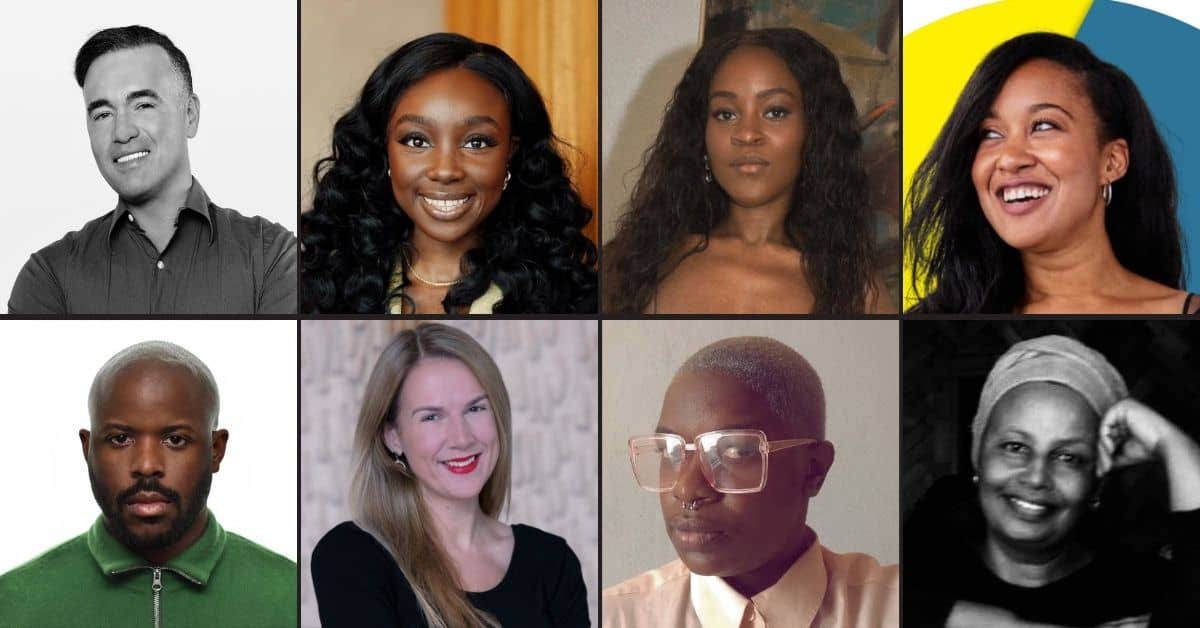
- Kevin Dumouchelle, curator at the Smithsonian’s National Museum of African Art, brings deep institutional knowledge and a commitment to approaching African art as a living, evolving field.
- Fola Adenugba, Forbes 30 Under 30 honouree and founder of ISE-DA, an art advisory and media platform dedicated to international Black contemporary art, is one of the most energetic voices championing diaspora collecting and cultural stewardship for a new generation.
- Aindrea Emelife, the Nigerian-British curator and art historian who trained at the Courtauld Institute of Art and curated Nigeria’s pavilion at the 2024 Venice Biennale, brings firsthand Biennale experience and a sharp focus on decolonial histories and the politics of representation.
- Dr. Tayler Ava Friar, TEDx speaker, Fulbright Scholar, and founder of ART|unknown, holds a PhD in art history from the University of Cape Town and has spent her career centering Black voices at the intersection of art, activism, and global development.
- Myles Igwebuike, the Nigerian-American designer and Royal College of Art graduate who curated Nigeria’s inaugural pavilion at the 2025 London Design Biennale, brings a practice rooted in Igbo heritage and material intelligence.
- Hannah O’Leary, Senior Advisor for Modern and Contemporary African Art at Sotheby’s, has spent two decades shaping the market for African art, setting over 200 world auction records and championing artists from across the continent in the world’s most prominent salesrooms.
- Pamina Sebastiao, a multidisciplinary visual activist based in Luanda, Angola, brings a powerful voice rooted in decolonial practice, the politics of the body, and Africa’s contemporary art scene.
- Konjit Seyoum, the Ethiopian artist, curator, and founder of Addis Ababa’s pioneering Asni Gallery, represents decades of quiet, steady institution-building at the heart of Ethiopia’s contemporary art movement.
Together, they bring a breadth of perspective, geography, and expertise that ensures every guest navigating the Biennale through the app has access to some of the most knowledgeable and passionate advocates for African art in the world today.
The app’s African-first design philosophy means that users don’t have to search for Africa within the Biennale. Africa finds them. Every pavilion, every artist, every Forum session and community moment is framed through the cultural and historical context that makes this Biennale edition so significant.
Following the success of this week’s preview, Africa.com and NMAfA are considering opening the app to the wider public for the remainder of the exhibition’s run through November 2026. Watch this space.
Why This Moment Is Different
Venice 2026 is not just a Biennale. It is a reckoning with visibility, with narrative authority, and with the slow but unmistakable rise of African and diasporic art to the centre of global culture. The presence of 13 African pavilions, the curatorial vision of Koyo Kouoh, the intellectual rigour of NMAfA’s engagement, and the media reach of Africa.com together represent something larger than any single event.
They represent a refusal to be a footnote.
As the canals of Venice shimmer this May, Africa.com invites you to experience this historic Biennale not from the outside looking in, but through African eyes, with African voices, on African terms.