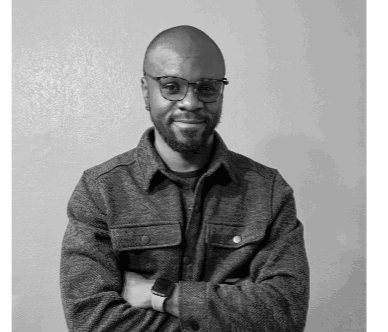
By Ayo Onikoyi
A Nigerian filmmaker and economist who has lived and worked across Nigeria, the United Kingdom, and the United States, Uzeme Efe Okakoso, professionally known as Shyne, has identified the major challenge facing the Nigerian movie industry.
In this interview with Potpourri, the filmmaker highlights the potential of practitioners and the limiting factors bedevilling the industry.
EXCERPTS:
You’ve lived and worked across Nigeria, the UK, and the US. How have these different environments shaped not just your filmmaking, but who you are as a person?
Each place refined a different part of my filmmaking voice. Nigeria gave me instinct; stories there breathe emotion, urgency, and truth. The UK shaped my discipline: how to think about story structure, performance, and intention before the camera ever rolls.
The US pushed me to think long-term, not just about making films but building a body of work. Creatively, it taught me restraint. I’ve learned that powerful films don’t always shout; sometimes they stay with you quietly, long after the screen goes dark.
How did you find your way into the film industry as an economist?
My path into film didn’t begin with economics; it began with photography. While studying economics, I was already drawn to images, framing moments, and telling stories without words. Photography taught me how to observe, and once I became interested in moving images, that curiosity naturally expanded into animation and film.
What drew me fully into filmmaking was the freedom it offered — the ability to tell stories without limits and to build entire worlds from imagination and lived experience.
Film allowed me to combine observation, emotion, and creativity in a way economics never could. Over time, it became clear that storytelling, not numbers, was the language I wanted to speak.
At what point did you realise storytelling, rather than economics, would become your primary language for understanding society?
It didn’t happen all at once. While I was studying economics, I was already drawn to photography. I found myself more interested in framing moments than analysing numbers. Photography taught me how to observe light, silence, and expression, and how a single image could carry emotion without explanation.
That curiosity slowly expanded into animation and moving images. Once motion entered the frame, I realised I wasn’t just capturing moments anymore; I was shaping meaning. Economics trained me to recognise patterns, but visual storytelling allowed me to interpret them emotionally.
At that point, filmmaking stopped being about technique and became about intention. I understood that people don’t remember theories; they remember stories. And I knew I wanted to make work that stays with people long after they’ve seen it.
From your perspective in a new creative environment, what do you see as the key factor limiting the Nigerian film industry’s alignment with global trends, and how can it be addressed?
I think the biggest limitation isn’t talent; it’s infrastructure and long-term thinking. There’s an incredible amount of creativity in Nigeria, but limited systems for development, preservation, and global positioning.
Alignment with global trends will come from investing in training, storytelling depth, technical standards, and cross-disciplinary collaboration — not just faster production. Nigerian stories are powerful; they just need the space and systems to travel properly.
How much of your personal experience finds its way into your films, consciously or unconsciously?
A lot of it does, but often indirectly. I don’t recreate my life on screen, but I translate emotional experiences — doubt, silence, courage, loss — into characters and situations. Every film is shaped by where I was mentally and creatively at the time. Even when the story is fictional, the emotional core is real.
Your work often explores identity, power, technology, and human vulnerability. What personal questions are you still trying to answer through your films?
Across my films, I’m interested in how people redefine themselves when control begins to slip. In works like Revelation and Think Before You Share, I explore how truth, technology, and exposure can quietly reshape identity.
Films such as The Questioning, Stuck, and Where Am I? focus on moments of self-confrontation, while 21st Century Love and Never Give Up reflect resilience and emotional endurance. Through these stories, I’m still asking how we hold on to our humanity in moments of pressure and change, and what it takes to remain whole when circumstances challenge who we believe we are.
Do you see filmmaking as a form of social responsibility, personal expression, or something in between?
It’s definitely something in between. I don’t believe every film needs to be a lecture, but I also don’t believe stories are neutral. Once you put something into the world, it shapes perception, even subtly. For me, filmmaking is personal expression with awareness.
I want my work to be emotionally honest, but also socially conscious, especially when dealing with vulnerable audiences or sensitive themes. If a film still speaks to someone who discovers it long after its release, then it’s done its job.
Films like Think Before You Share and Revelation tackle internet safety and vulnerability. Were these stories inspired by real-life experiences you witnessed?
Yes, very much so. They were inspired by patterns I observed — people harmed not by strangers, but by systems they trusted, platforms they used daily, or information they didn’t fully understand.
These stories came from watching how quickly digital spaces can shift from being empowering to being dangerous, especially for young people. I focus on human behaviour, not headlines. Technology changes, platforms evolve, but fear, trust, curiosity, and regret don’t. By grounding stories in emotion rather than trends, the films remain relatable even as the world moves on.
As someone trained in both filmmaking and UI/UX design, how do you balance emotional storytelling with data-driven thinking?
I see them as complementary, not conflicting. UI/UX design taught me empathy at scale — understanding how people move through systems, where they hesitate, where they fail, and where they feel safe. In filmmaking, that translates to intentional storytelling.
I think about audience experience the same way I think about user experience: pacing, clarity, emotional payoff. Data sharpens the structure; emotion gives it meaning.
You’ve spoken about ideas around improving casting and auditioning processes. What sparked that interest, and how does it relate to your filmmaking?
The idea grew organically from my experiences as a filmmaker, rather than from a tech background. While working on different projects, I became increasingly aware of how difficult and limiting casting and auditioning can be, especially for independent filmmakers and emerging actors.
Although the platform is still a vision I’m developing, it reflects a larger curiosity about how storytelling can be supported by better creative tools. My interest lies in rethinking how auditions are experienced, making the process more accessible, more human, and more aligned with the emotional nature of performance.
At this stage, it’s about exploration and intention rather than execution. The goal is simply to imagine better ways for filmmakers and performers to find each other, and to let that thinking inform both my creative work and future collaborations.
The post Why Nigerian movie industry not thriving as it should — Okakoso appeared first on Vanguard News.