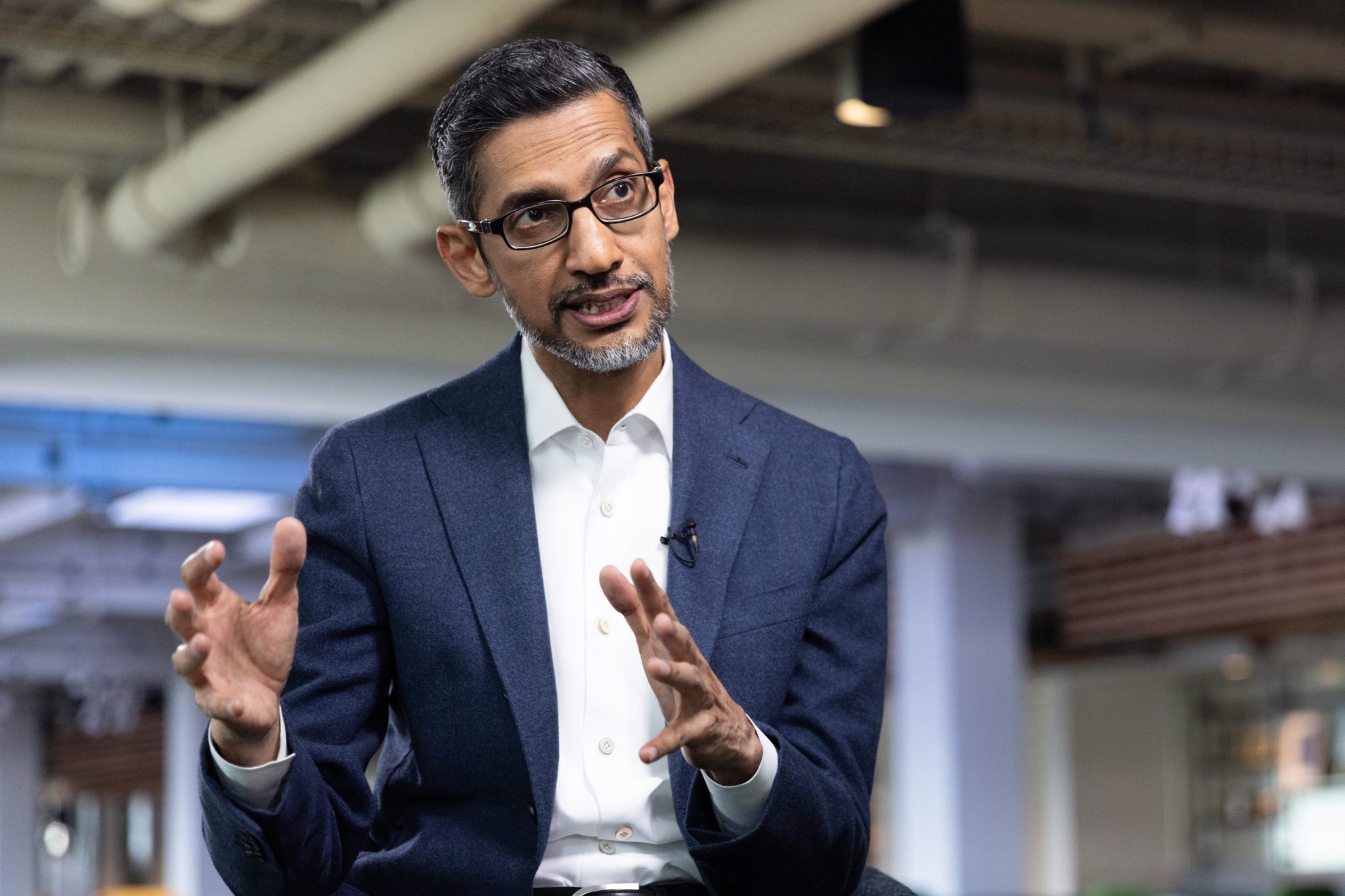
Tech leaders are split on whether AI will bring about a jobs armageddon or a utopia of zero work and universal high income. Now, Google CEO Sundar Pichai is adding to the debate. And in his eyes, everyone’s job could be impacted by the new tech—even his own. People will just have to adapt accordingly.
“AI is the most profound technology humanity is ever working on, and it has potential for extraordinary benefits, and we will have to work through societal disruption,” Pichai told the BBCin a recent interview.”
The chief executive has a front-row seat to how AI will shake up the world; last month, Google rolled out its latest model, Gemini 3, and received critical appraise. The innovation—seen as an improvement from Gemini 2.5 released around eight months ago—ignited optimism among investors and analysts, who heralded the chatbot as their “favorite model generally available today.” As the technology continues to advance, Pichai emphasized it’ll create new opportunities, while also admitting some roles will be phased out.
“It will evolve and transition certain jobs,” Pichai continued. “People will need to adapt, and then there will be areas where it will impact some jobs. So, as a society, I think we need to be having those conversations.”
People may believe only certain entry-level roles are being automated, like customer service representatives or junior analysts, but Pichai is adamant all roles will be touched by the tech. He even said his own job as CEO is “one of the easier things” for AI to take over one day. There is no industry or high-powered role disconnected from the age of AI—but those who embrace the tools will be the ones who succeed.
“I think people who learn to adopt and adapt to AI will do better,” Pichai continued. “It doesn’t matter whether you want to be a teacher, a doctor—all those professions will be around, but the people who will do well in each of those professions are people who learn how to use these tools.”
AI is wiping out jobs—but Pichai says kids shouldn’t change course
Young, up-and-coming professionals may hear Pichai’s prediction and question if they chose the right career path. After all, they’re stepping out of college and into an uncertain labor market.
Job postings across the U.S. have fallen by about 32% since ChatGPT hit the market, according to data from the Federal Reserve, as businesses deploy AI tools to boost efficiency. The percentage of Gen Z staffers at large public tech companies has been cut in half within the past two years; once-lucrative career paths, like computer programming, have hit employment lows; and now, humanoid robots are even being designed to take on physical work.
It’s a dire situation that’s forced many aspiring Gen Zers to reconsider if costly college degrees are worth the dwindling payout, or even switch to seemingly more AI-proof blue-collar careers. However, the Google CEO asserted that there is no golden-ticket college major or profession that is guaranteed to be safeguarded from AI—people should pursue whatever career they want, regardless of how the tech changes the job landscape.
“Based on what I see, I wouldn’t change anything of how we’ve always thought,” Pichai said in reference to what parents should advise their kids on. “I think there’s going to be a wide variety of disciplines which will end up mattering. I would encourage the next generation to embrace the technology, learn to use it in the context of what you do.”