BBC Afghan Provider, Kabul
 BBC
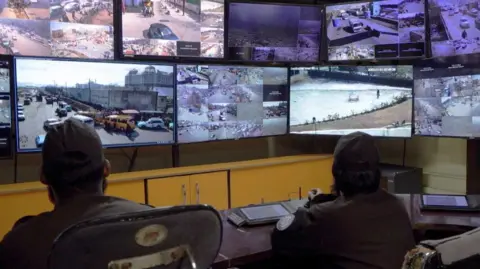
BBCIn a crowded keep watch over centre, surrounded by means of dozens of TV monitors, the Taliban’s police pressure proudly presentations off its newly-acquired community of 90,000 CCTV cameras – worn to observe over the daily lives of hundreds of thousands of crowd.
“We monitor the entire city of Kabul from here,” says Khalid Zadran, a spokesperson for the Taliban police well-known, pointing to some of the monitors.
The government say such surveillance will assistance struggle crime, however critics concern it is going to be worn to clamp indisposed on dissent and to observe the stern morality code enforced by means of the Islamist Taliban authorities beneath their interpretation of Sharia regulation.
The BBC are the primary world reporters allowed to look the gadget in motion.
Throughout the keep watch over room, law enforcement officials take a seat in rows gazing the reside streams from 1000’s of cameras, conserving tabs at the lives of the six million crowd who reside in Kabul.
From vehicle licence plates to facial expressions, the whole lot is monitored.
“In certain neighbourhoods, when we notice groups of people and suspect they might be involved in drug use, criminal activities, or something suspicious, we quickly reach out to the local police,” says Zadran.
“They arrive swiftly to investigate the nature of the gathering.”
Beneath the former authorities, Kabul used to be threatened day-to-day with assaults from the Taliban and so-called Islamic Situation militants, in addition to prime profile kidnappings and car-jackings. When the Taliban retook energy in 2021, they promised to split indisposed on crime.
The dramatic build up within the collection of surveillance cameras within the capital is an indication of rising sophistication in the best way the Taliban put in force regulation and series. Ahead of their go back, simply 850 cameras had been in park within the capital, in line with a spokesman for the safety forces that had been pushed from energy.
On the other hand, within the life 3 years, the Taliban government have additionally offered a space of draconian measures restricting crowd’s rights and freedoms, particularly the ones of girls. The Taliban authorities has no longer been officially recognised by means of any alternative nation.

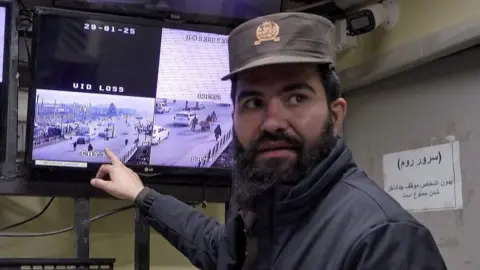
The surveillance gadget the BBC is proven in Kabul options the strategy to observe crowd by means of facial reputation. At the nook of 1 display screen pictures pop up with each and every face labeled by means of day space, gender, and possibly sooner they’ve a beard or a face masks.
“On clear days, we can zoom in on individuals [who are] kilometres away,” says Zadran, highlighting a digital camera located up prime that specializes in a hectic site visitors junction.
The Taliban even observe their very own workforce. At a checkpoint, as infantrymen popped detectable the trunk of a vehicle for inspection, the operators centered their lenses, zooming in to scrutinise the contents inside of.
The internal ministry says the cameras have “significantly contributed to enhancing safety, curbing crime rates, and swiftly apprehending offenders”. It provides the creation of CCTV and motorbike controls have ended in a 30% scale down in crime charges between 2023 and 2024 however it isn’t imaginable to independently check those figures.
On the other hand, rights teams are enthusiastic about who’s being monitored and for the way lengthy.
Amnesty Global say putting in cameras “under the guise of ‘national security’ sets a template for the Taliban to continue their draconian policies that violate fundamental rights of people in Afghanistan – especially women in public spaces”.
By means of regulation girls don’t seem to be allowed to be heard out of doors their homes, even though in follow this isn’t being strictly enforced. Yongster ladies are averted from gaining access to secondary and better schooling. Ladies are barred from many methods of function. In December, girls coaching as midwives and nurses advised the BBC that they had been ordered no longer to go back to categories.
Age girls proceed to be seeing at the streets of towns like Kabul, they’re required to put on a face masking.

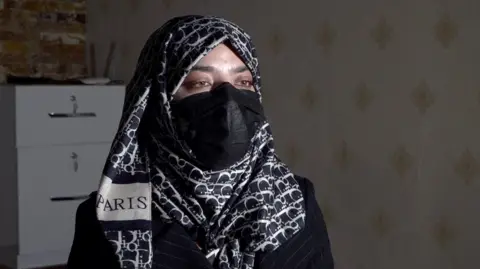
Fariba*, a tender graduate who lives together with her folks in Kabul, has been not able to search out paintings for the reason that Taliban got here to energy. She tells the BBC there’s “significant concern that surveillance cameras may be used to monitor women’s hijabs [veils]”.
The Taliban say best town police have get right of entry to to the CCTV gadget and the Propagation of Usefulness and Prevention of Vice Ministry – the Taliban’s morality police – does no longer utility it.
However Fariba is worried the cameras will additional endanger the ones adversarial to Taliban rule.
“Many individuals, especially ex-military members, human rights advocates and protesting women, struggle to move freely and often live in secrecy,” she says.
“There is significant concern that surveillance cameras will be used to monitor women’s hijabs too,” she says.
Human Rights Keep tabs on, in the meantime, says Afghanistan does no longer have the information coverage rules in park to keep watch over how the accrued CCTV pictures is held and worn.
The police say the information is saved just for 3 months, past, in line with the internal ministry, the cameras don’t pose a ultimatum to privateness as they “are operated from a special and completely confidential room by a specific and professional person in charge”.
The cameras seem to be Chinese language-made. The keep watch over room displays and branding at the feeds the BBC noticed carried the identify Dahua, a Chinese language government-linked corporate. Previous experiences that the Taliban had been in talks with China’s Huawei Applied sciences to shop for cameras had been denied by means of the corporate. Taliban officers refused to reply to BBC questions on the place they sourced the apparatus.
One of the value of putting in the untouched community is falling on regular Afghans who’re being monitored by means of the gadget.
In a area in central Kabul the BBC said to Shella*, who used to be requested to pay for one of the vital cameras put in at the streets akin her house.
“They demanded thousands of afghanis from every household,” she says. It’s a immense quantity in a rustic the place the ones girls who’ve jobs would possibly earn best round 5,000 afghanis ($68; £54) a day.
The humanitarian status in Kabul, and in Afghanistan usually, remainder precarious upcoming years of struggle. The rustic’s economic system is in emergency, however world backup investment has been in large part prohibited for the reason that Taliban got here again to energy.
In line with the United Countries, 30 million crowd are wanting backup.
“If families refused to pay [for the cameras], they were threatened with water and power cuts within three days,” Shella provides. “We had to take loans to cover the costs.
“Public are ravenous – what excellent are those cameras to them?”
The Taliban say that if people do not want to contribute, they can put in an official complaint.
“Participation used to be voluntary, and donations had been within the masses, no longer 1000’s,” Khalid Zadran, the Taliban police spokesperson, insists.
Despite the assurances, rights campaigners both inside and outside Afghanistan continue to have concerns over how such a powerful surveillance system will be used.
Jaber, a vegetable seller in Kabul, says the cameras represent another way in which Afghans are made to feel powerless.
“We’re handled like trash, denied the chance to generate income, and the government regard us as nugatory,” he told the BBC.
“We will do not anything.”
*The names of the ladies interviewed for this piece had been modified for his or her protection
With spare reporting by means of Peter Ball